Employee Engagement Ideas for Remote and Hybrid Teams That Actually Work

TL;DR
- Global employee engagement dropped to its lowest point since 2020, and distributed teams face unique challenges that annual surveys and virtual happy hours will never fix.
- The engagement ideas that work for remote and hybrid teams focus on daily rhythms, not quarterly events. Think continuous feedback loops, structured recognition, and manager-led rituals.
- Managers are the single biggest lever for engagement in distributed teams, yet manager engagement itself has plummeted. Supporting them is not optional, it is the strategy.
- Start this week: replace one scheduled all-hands with a 15-minute “wins and blockers” standup, and ask one real question in your next 1:1 that you have never asked before.
You have probably tried the virtual trivia night. Maybe the Slack channel for pet photos. Perhaps someone suggested a monthly “culture committee” that met twice and then quietly disappeared from the calendar.
If you are an HR leader managing remote or hybrid teams, you already know the surface-level engagement playbook does not work. It never really did, but distributed work made the gap impossible to ignore. When people are not sharing a physical space, the small signals that used to happen naturally (a manager noticing someone is quieter than usual, a quick hallway conversation that turns into a real check-in) simply do not occur unless you design for them.
In this article, I will share 15 employee engagement ideas built specifically for remote and hybrid environments. These are not theoretical. They are grounded in what the research says, what HR leaders are actually seeing work, and where most teams go wrong.
Why Most Employee Engagement Ideas Fail in Distributed Teams
Before jumping into the list, it is worth understanding why the standard engagement playbook breaks down when teams are not co-located.
Gallup’s 2025 State of the Global Workplace report found that global employee engagement fell to its lowest level since 2020, with the economic cost of disengagement estimated at roughly $10 trillion in lost productivity worldwide. Fully remote workers actually reported higher engagement rates than their on-site counterparts, but they also reported higher daily stress. Hybrid workers landed somewhere in the middle on both measures.
The takeaway is not that remote work is bad or good for engagement. It is that work location alone does not determine how engaged someone feels. McKinsey’s research on hybrid work reinforces this: in-person, remote, and hybrid workers all report similar levels of burnout and intent to quit. What separates high-engagement distributed teams from low-engagement ones is not where people sit. It is how intentionally the organization designs connection, feedback, and visibility into everyday work.
That is the lens for every idea below. Not “fun activities to boost morale,” but structural changes to how your distributed teams experience work on a daily basis.

Employee Engagement Ideas That Work for Remote and Hybrid Teams
1. Replace the annual engagement survey with continuous pulse check-ins
Annual surveys are like getting your blood pressure checked once a year and assuming you are healthy the other 364 days. By the time you get the results, the problems have either resolved themselves or gotten worse.
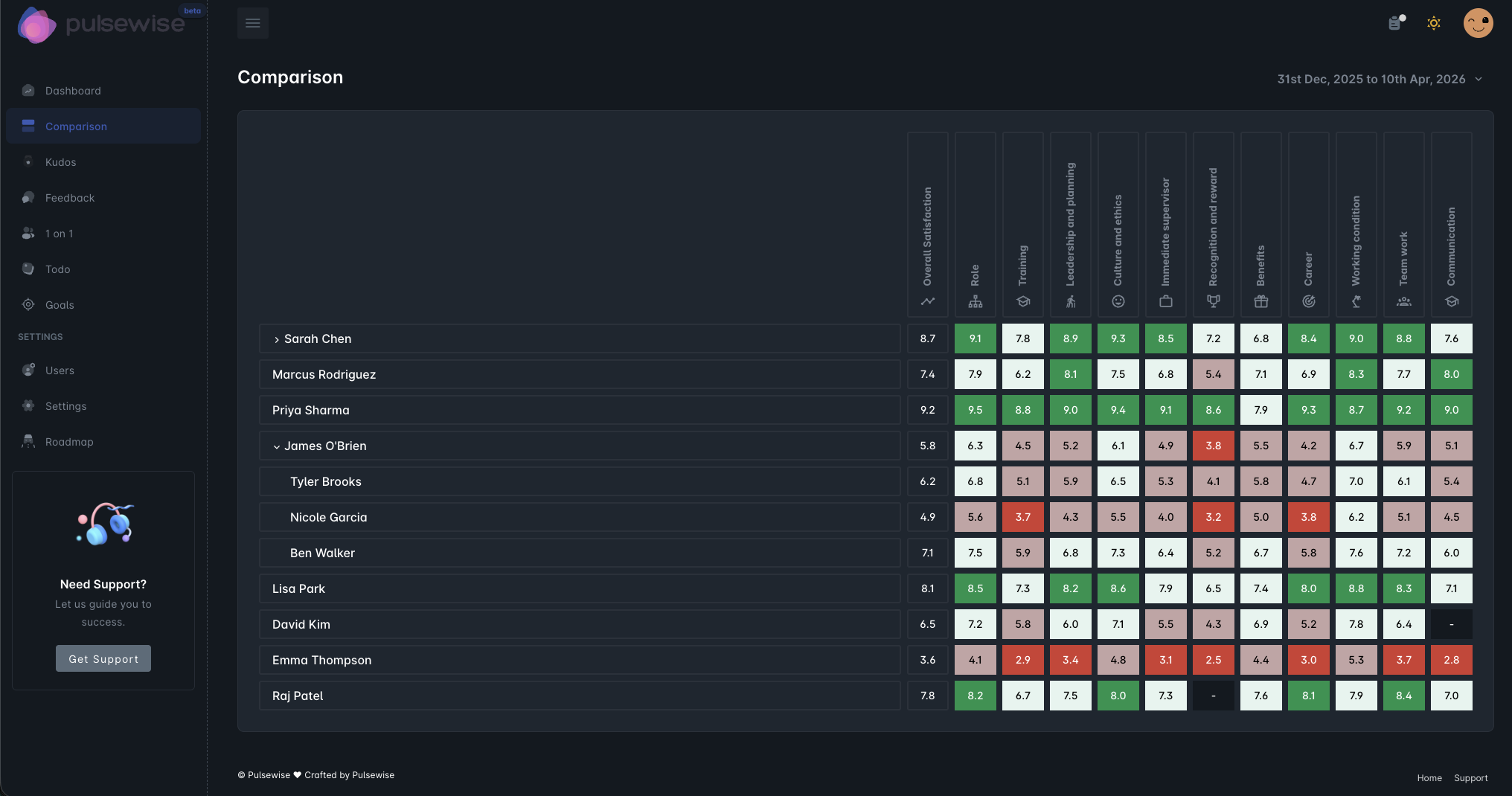
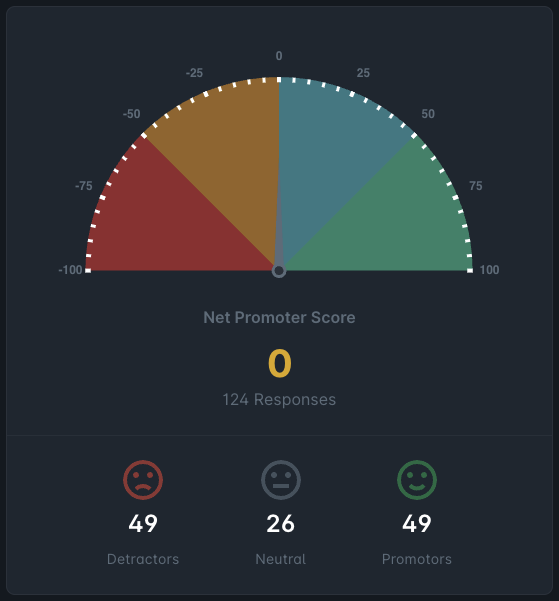
For distributed teams, the gap between what is actually happening and what leadership perceives is even wider. A short, regular pulse survey (weekly or biweekly, no more than 3 to 5 questions) gives you a real-time read on team sentiment before small frustrations become resignation letters.
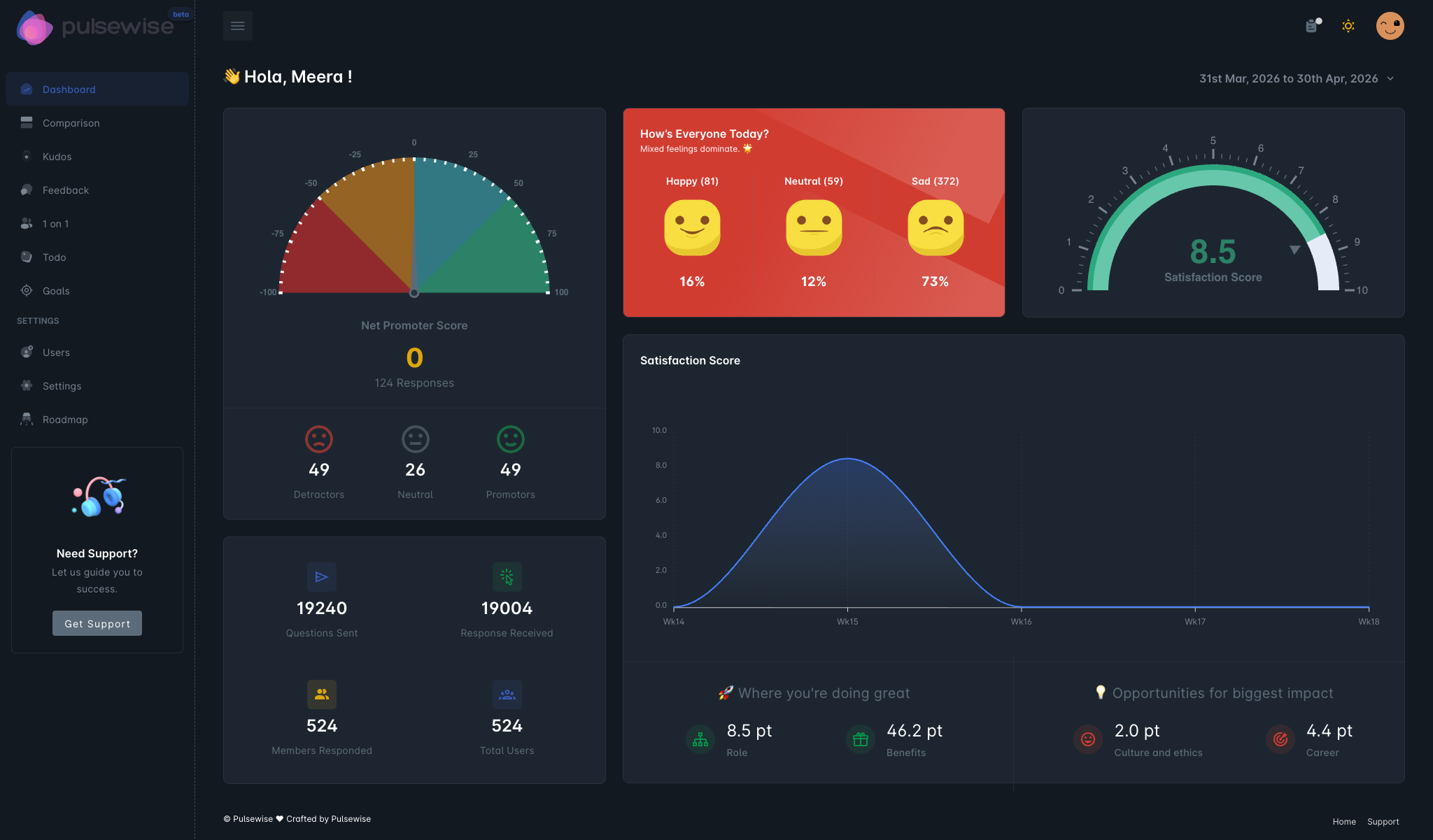
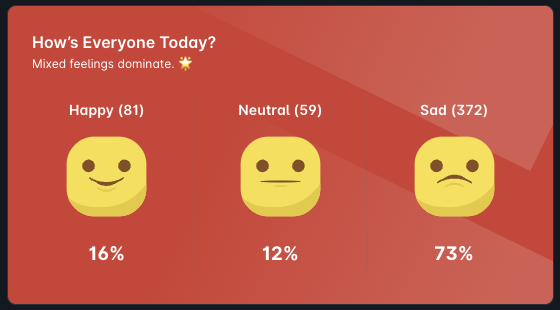
This is where platforms like Pulsewise’s pulse surveys and DailyMood tracking become genuinely useful. Rather than dumping a 60-question survey on employees once a quarter, it lets you run lightweight scheduled pulses and track daily mood patterns at the department level. So instead of discovering in October that your engineering team has been disengaged since June, you see the mood shift in the same week it starts. That changes everything about how quickly you can respond.
2. Build “structured serendipity” into the workweek
In offices, chance encounters spark ideas, relationships, and a sense of belonging. Remote work eliminates this entirely unless you create it on purpose.
Set up randomized cross-team coffee chats (tools like Donut for Slack work well for this). But here is the key most teams miss: give people a conversation starter. Not “get to know each other,” but a specific prompt like “What is one thing you learned this month that changed how you work?” or “What is the most underrated tool or habit you rely on?” Without a prompt, these calls often feel awkward and people stop showing up after the second one.
3. Make recognition specific, public, and frequent
“Great job on the project” in a private message does almost nothing for engagement. Recognition works when it is specific about what the person did, visible to others, and tied to a value or behavior the team cares about.
For hybrid teams, visibility is the challenge. The person working from home on a Thursday afternoon who solved a critical bug does not get the spontaneous round of applause the in-office team might. You have to build that visibility deliberately.
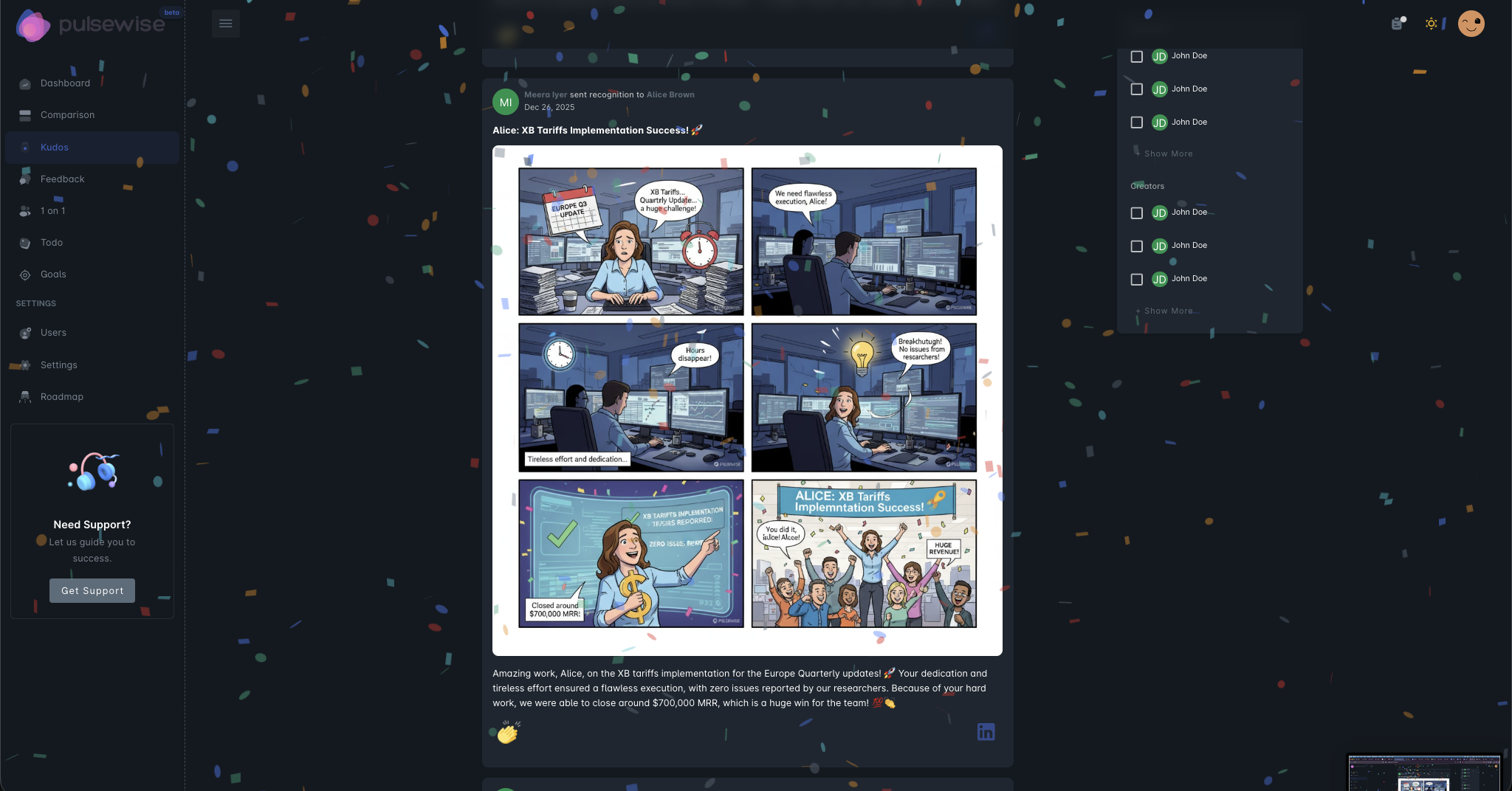
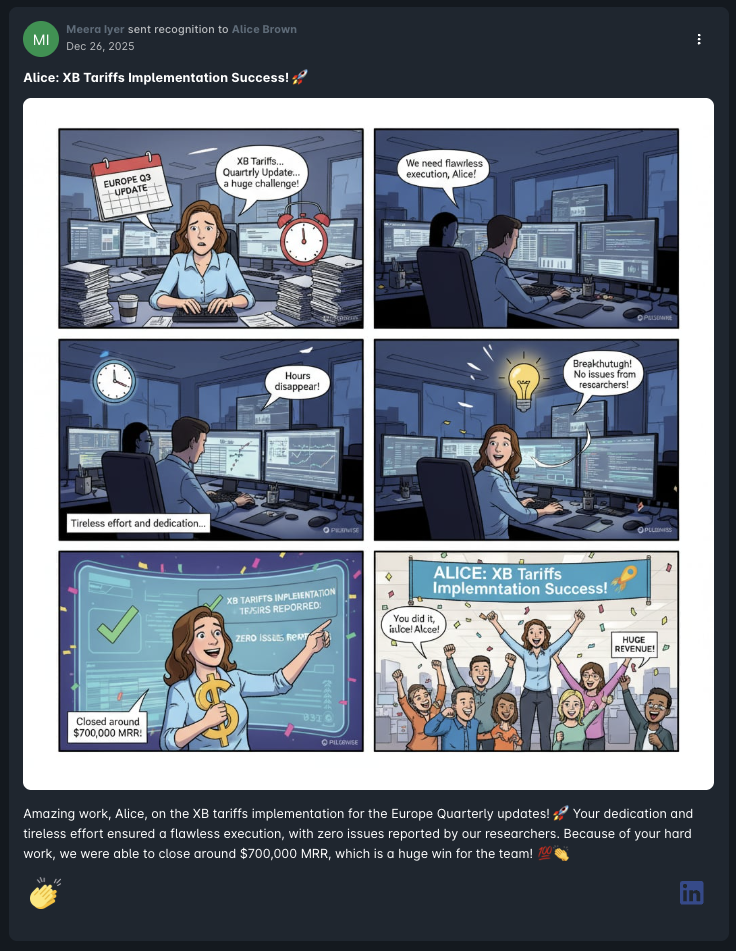
Pulsewise’s Kudos and Recognition system approaches this well. It lets anyone send structured recognition that is visible across the team, with AI-generated taglines and trait tagging that connect the recognition to specific behaviors and company values. It also integrates with Slack, so the recognition shows up where people already are instead of being buried in a separate platform nobody checks. When recognition is this frictionless, it happens more often, and frequency matters more than formality.
4. Redesign your 1:1s as the backbone of engagement
Here is a pattern I see constantly: organizations invest in elaborate engagement programs while their managers are running 1:1 meetings from a blank page with no preparation. The 1:1 is the single highest-leverage engagement touchpoint a manager has with a direct report. If those conversations are shallow, no amount of team-building events will compensate.
For remote and hybrid teams, the 1:1 is often the only dedicated time a manager and employee have together. Make it count. Establish a lightweight structure: start with a personal check-in (two minutes, not performative), move to blockers and priorities, then close with one forward-looking question. Rotate in questions like “What is one thing that frustrated you this week that I might not know about?” or “Where do you feel stuck right now?”
5. Create async-first feedback channels
Not everything needs a meeting. In distributed teams, waiting for the next sync call to share feedback creates a bottleneck that slows down both performance and connection.
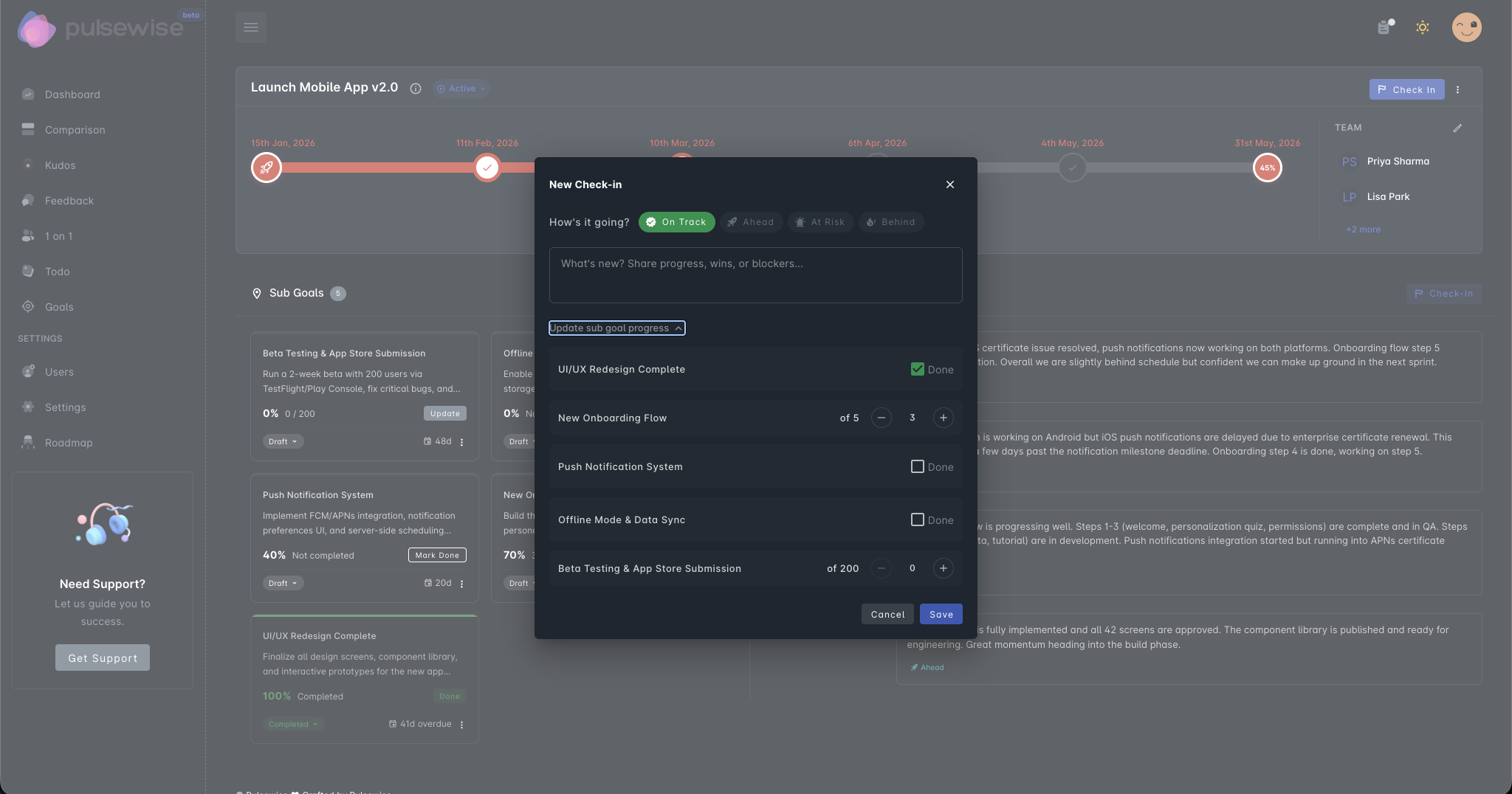
Build async feedback into your team’s daily workflow. This could be as simple as a shared doc where people log daily or weekly reflections, a dedicated Slack channel for project-specific feedback, or a tool that lets employees share quick thoughts that get routed to the right person. The key is making it lightweight enough that people actually use it and structured enough that it does not become noise.
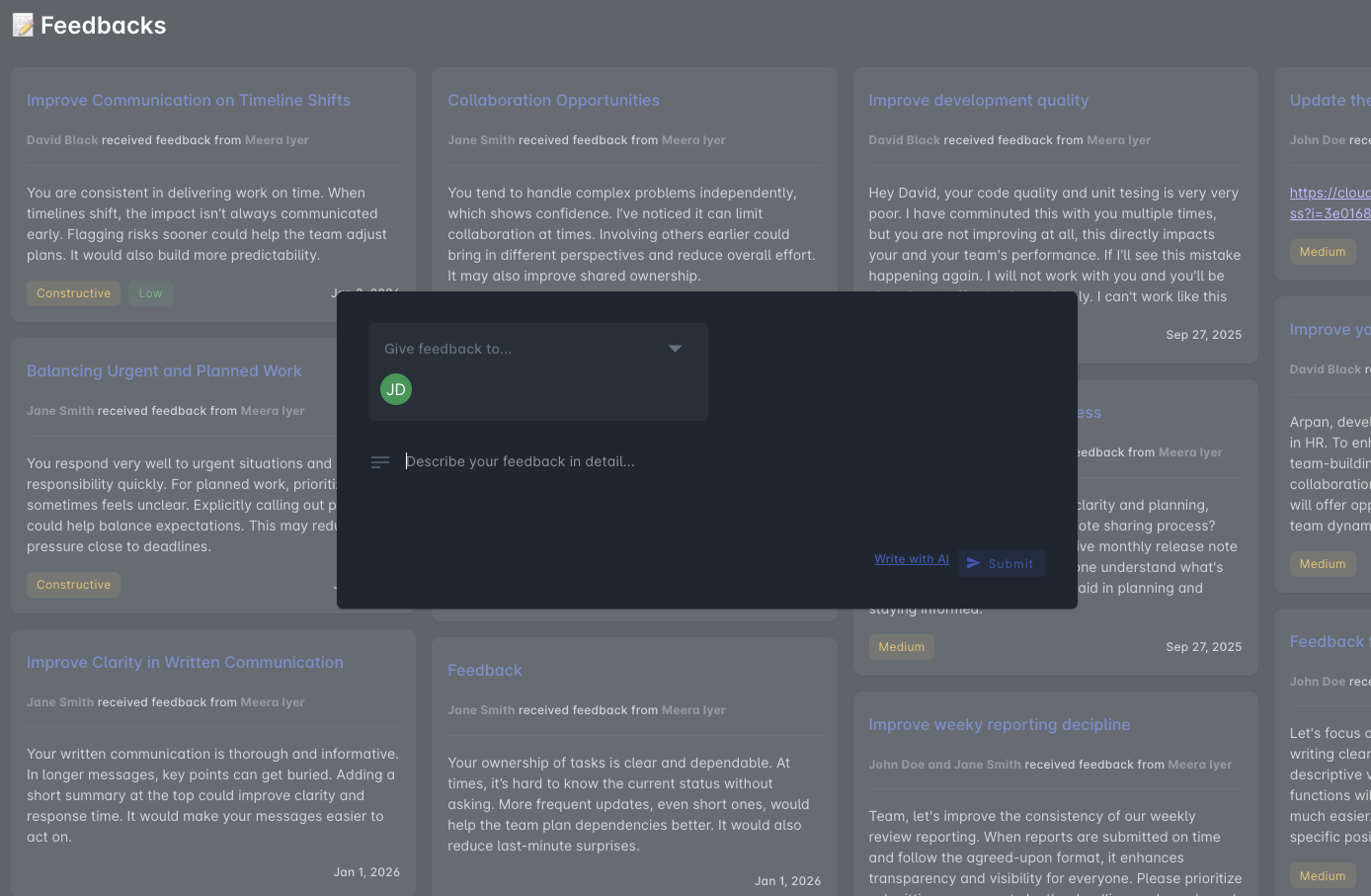
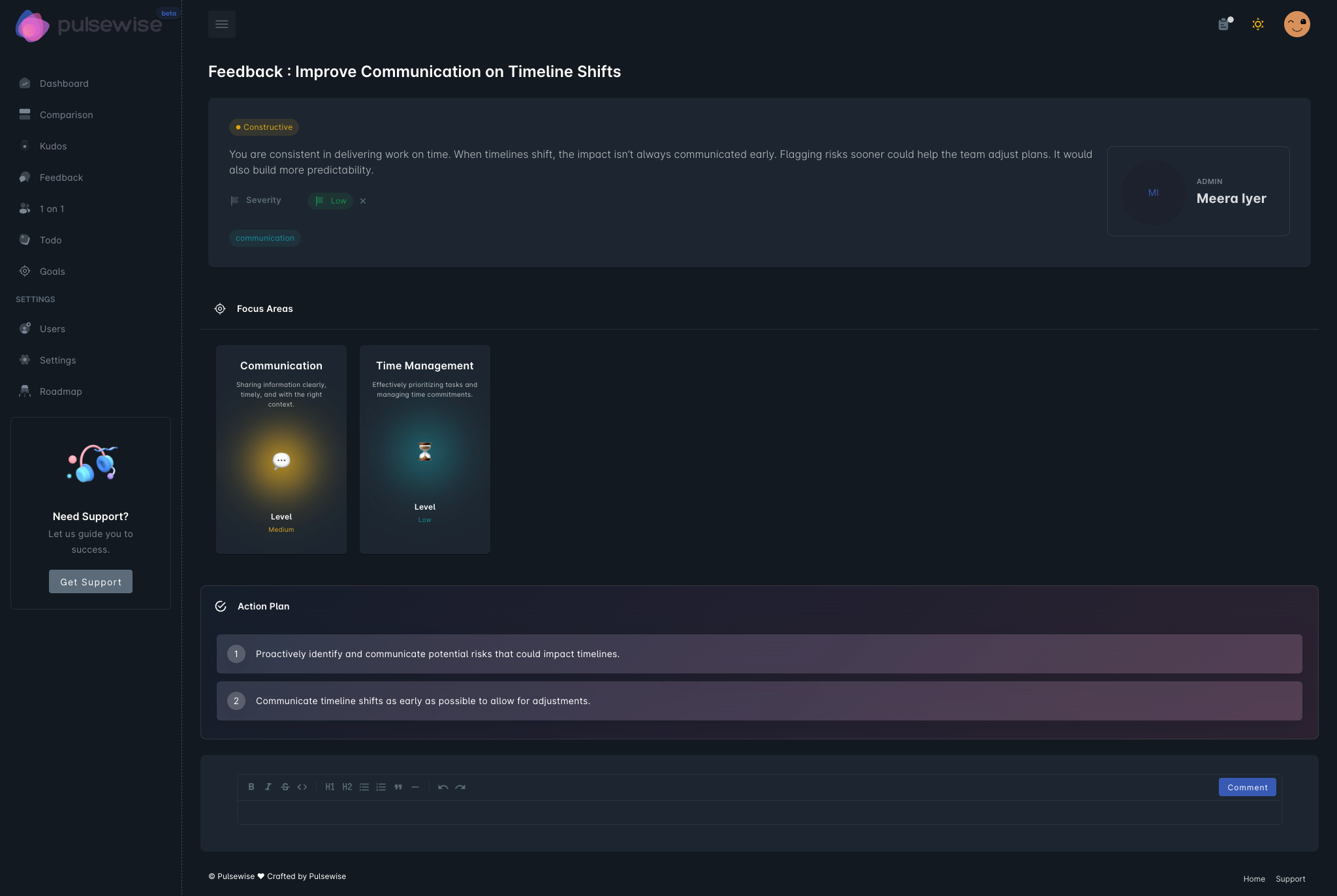
When feedback flows continuously rather than being saved up for quarterly reviews, problems get smaller because they get caught earlier. SHRM’s research on hybrid work consistently shows that organizations with regular feedback rhythms see measurably higher engagement and lower voluntary turnover.
6. Give managers real data before every conversation
This one is specifically for HR leaders who want to enable their managers without micromanaging them.
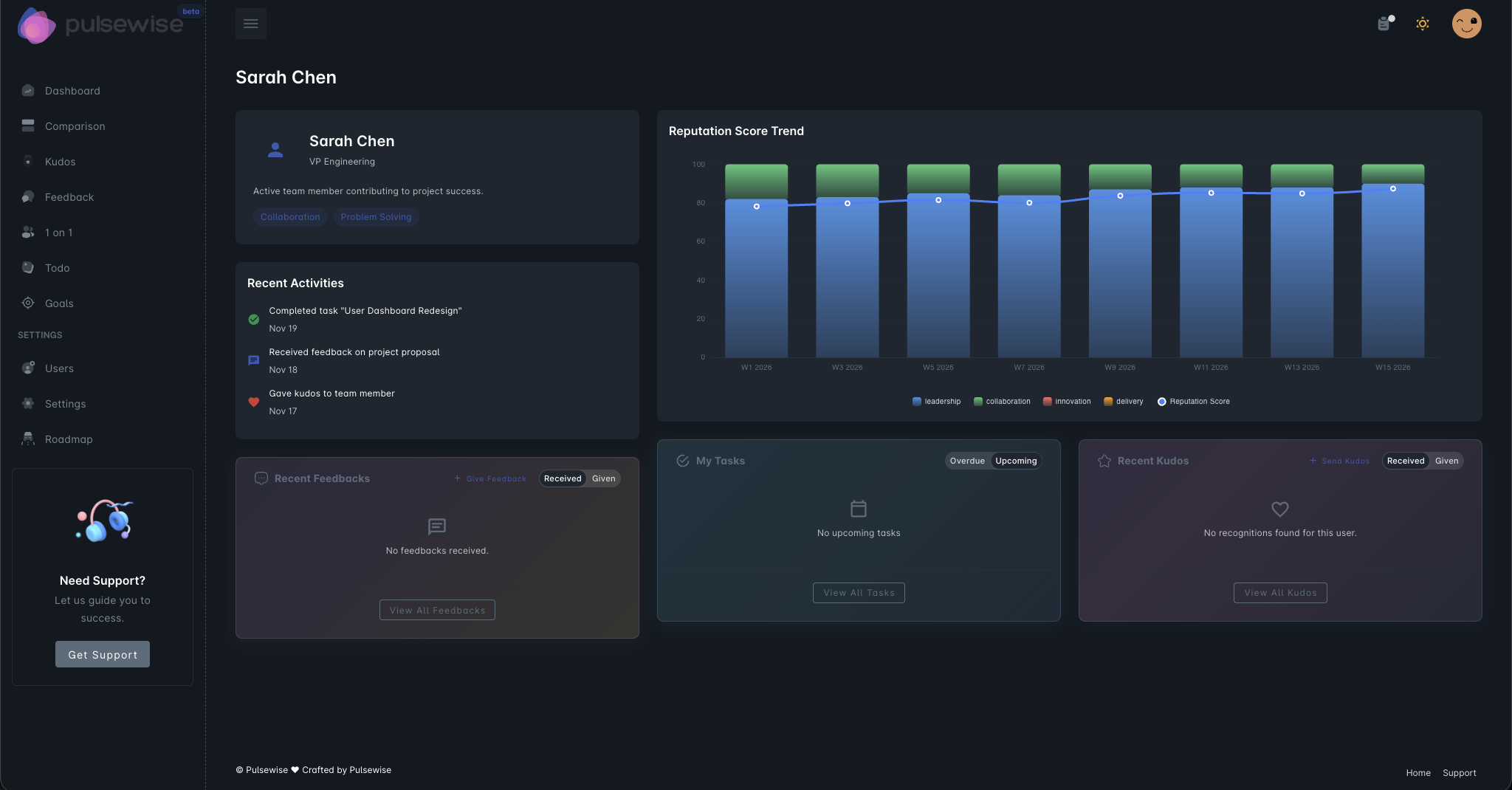
Most managers in distributed teams are flying blind. They do not know that an employee’s engagement scores have been trending down, that someone has not received recognition in six weeks, or that a team member’s goals are stalling. They find out when it is too late, usually during an exit interview.
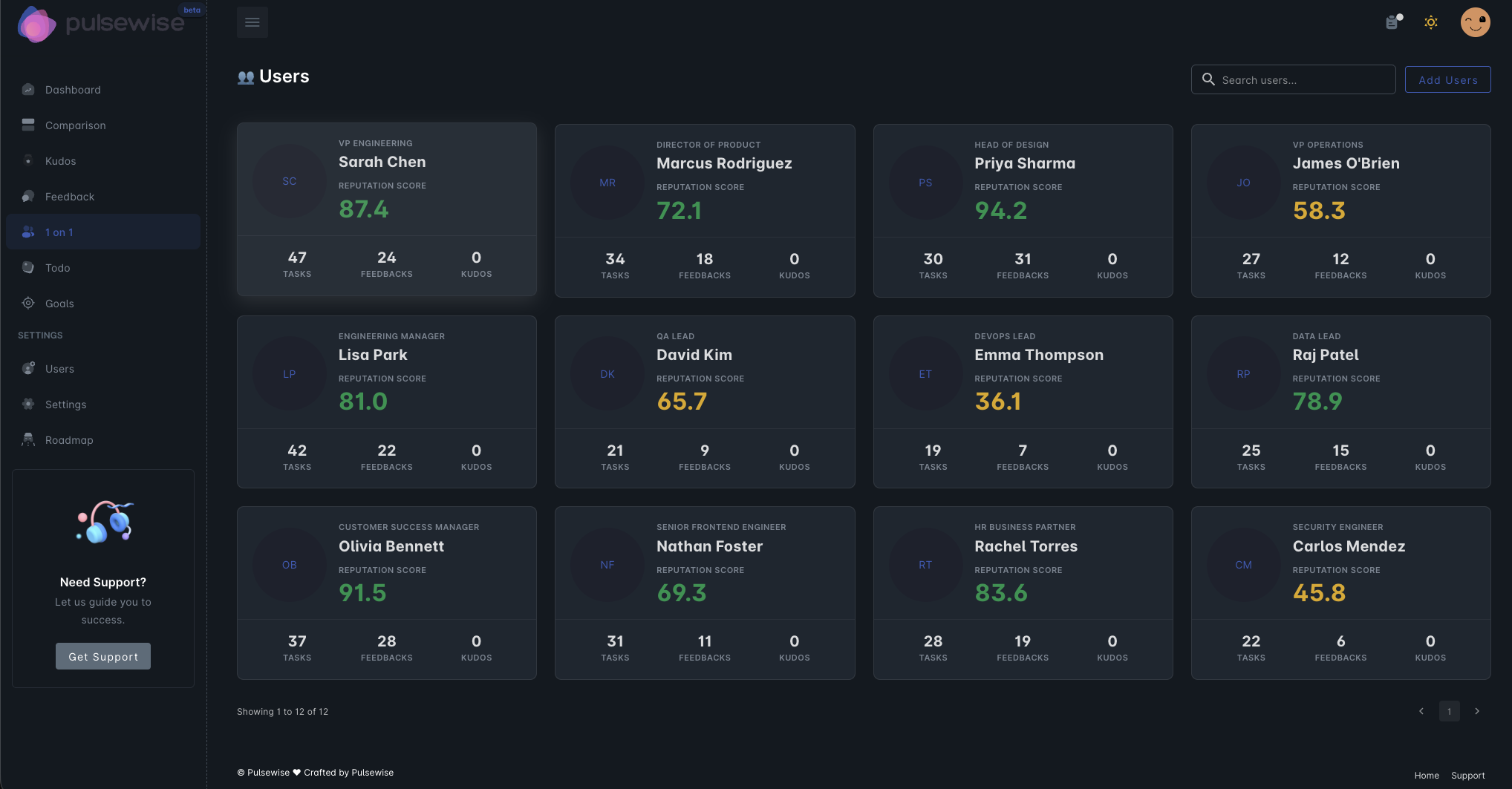
Pulsewise’s One on One Board with AI-suggested next actions tackles this directly. It surfaces personalized prompts for each manager-employee relationship based on recent mood trends, feedback patterns, and goal progress. So before a 1:1, a manager might see: “Mood trend has dropped this week. Consider opening with a wellbeing check.” That kind of nudge takes zero extra effort but transforms the quality of the conversation. Instead of generic status updates, managers are having the conversations that actually matter.
7. Run “energy audits” instead of satisfaction surveys
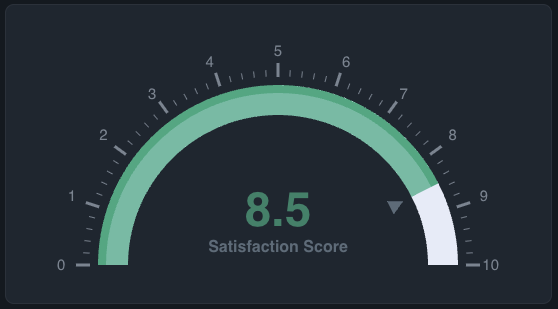
This is one most HR teams have not tried, and it works remarkably well with distributed teams. Instead of asking “How satisfied are you?” (which people answer on autopilot), ask “What gives you energy at work this week?” and “What drains your energy?”
The framing matters. Energy is immediate and personal. Satisfaction is abstract and comparative. When you ask about energy, you get actionable answers: “Back-to-back video calls with no breaks drain me” or “I feel energized when I get to work on the design system with no interruptions.” These are things a manager or HR leader can actually do something about.
Run this as a 10-minute async exercise every two weeks. Share anonymized themes with the team. Watch what happens when people see that leadership is listening to the specific, daily texture of their work, not just the big-picture sentiment.
8. Design “overlap hours” intentionally for hybrid teams
For hybrid teams where some people are in the office and others are remote, the biggest engagement killer is the two-tier experience. Office workers get the hallway conversations and spontaneous collaboration. Remote workers get the recording of the meeting and the feeling of being an afterthought.
Fix this by designating 2 to 3 “overlap hours” per day when everyone, whether in-office or remote, operates as if they are remote. All meetings happen on video with individual screens. Collaboration happens in shared digital tools, not on the office whiteboard. This is not about punishing in-office workers. It is about creating a level playing field so remote team members are not always catching up on decisions they were technically part of but experientially excluded from.
9. Create a “manager support circle” program
Here is a stat that should concern every HR leader: Gallup found that manager engagement dropped five points in a single year, falling from 27% to 22%. You cannot build engaged teams on the backs of disengaged managers.
Most manager development programs focus on skills: coaching techniques, feedback frameworks, conflict resolution. Those are important. But what managers in distributed teams often need most is peer support, a small group of 4 to 6 other managers who meet biweekly to share what is working, what is not, and what they are struggling with.
These are not training sessions. They are support circles. No facilitator needed, just a shared understanding that managing a distributed team is hard and that sharing honest experiences makes everyone better at it. HR’s role is to set them up, provide a loose agenda template and then get out of the way.
10. Make goals visible and connected to the bigger picture
Distributed teams lose engagement when individual work feels disconnected from what the organization is trying to achieve. In an office, you absorb context through osmosis. Working remotely, you only know what someone explicitly tells you.
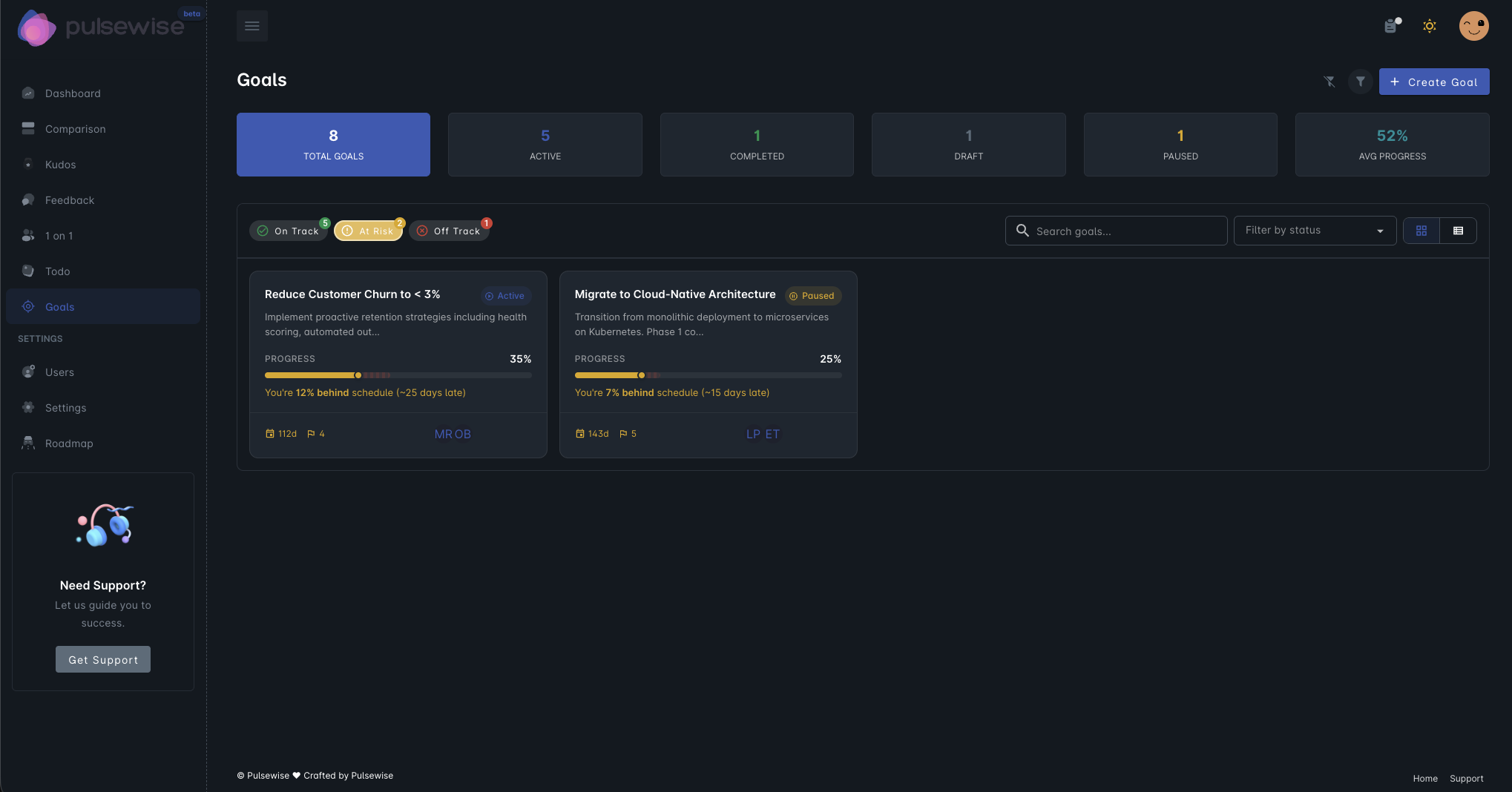
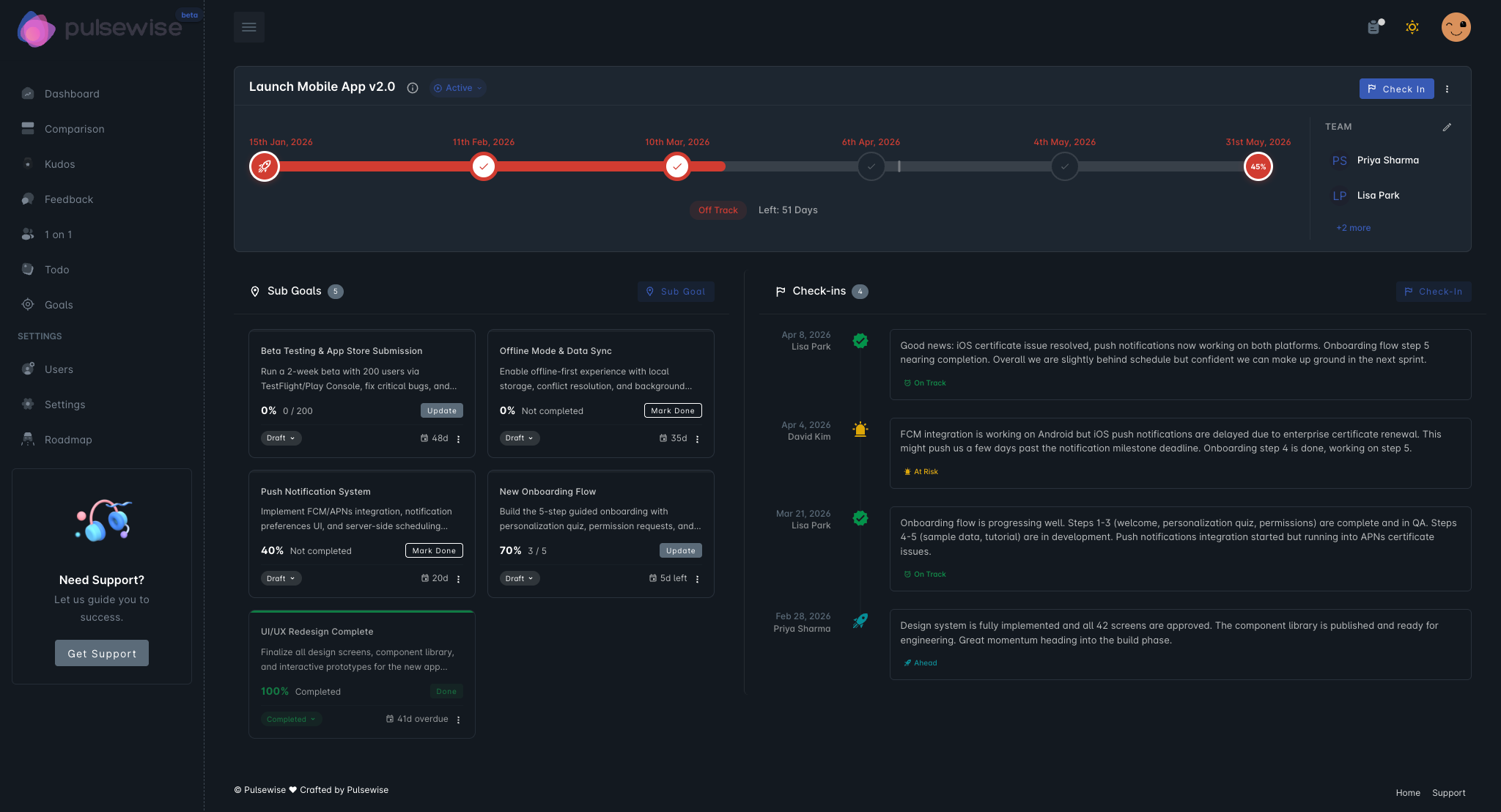
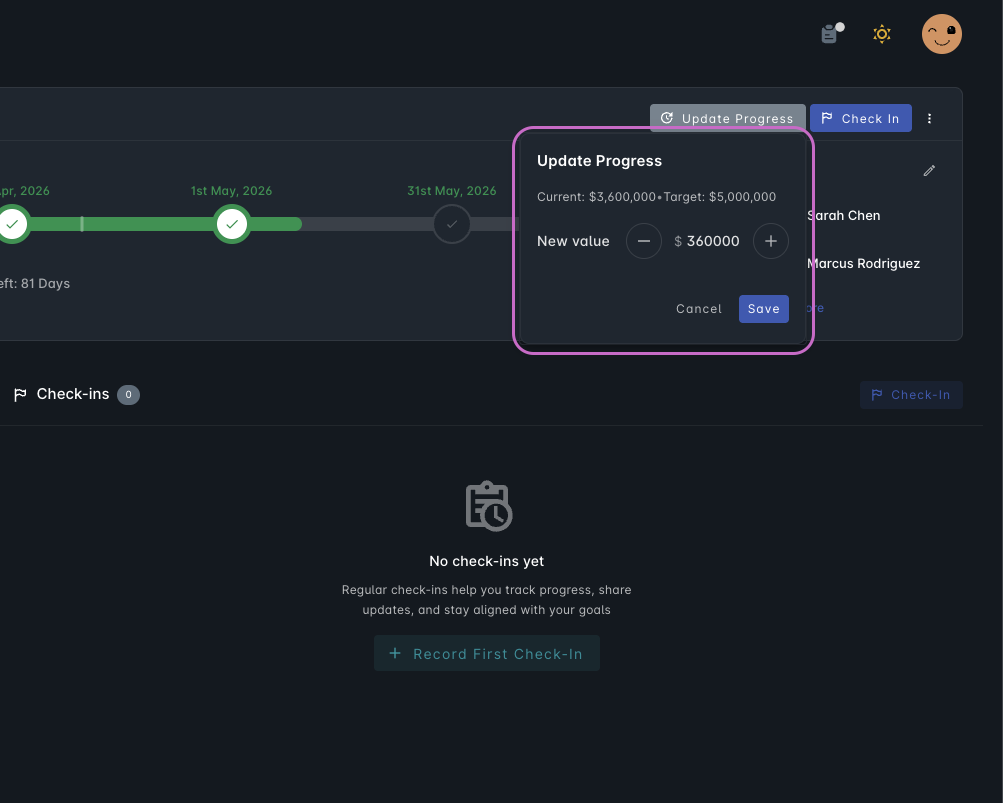
Make goals visible at every level. Not in a locked-down HR system that nobody checks, but in a tool the team interacts with regularly. When an individual contributor can see how their milestone connects to their team’s objective, which connects to a company-level goal, work feels more meaningful even when you are doing it alone from your kitchen table.
The best goal systems show progress visually. Something as simple as seeing a progress bar move from 40% to 55% after you complete a deliverable creates a dopamine hit that isolated remote work rarely provides otherwise.
11. Establish rituals, not just meetings
Distributed teams need rituals more than co-located teams do, because rituals create shared identity when shared space does not exist.
A ritual is different from a meeting. A meeting has an agenda and an output. A ritual has a rhythm and an emotional resonance. Examples: a Monday morning 10-minute “intentions” call where everyone shares their top priority for the week (no discussion, just sharing). A Friday afternoon async thread where people post one win, even a small one. A monthly “lessons learned” session where the team discusses one thing that went wrong without blame.
The specific ritual matters less than the consistency. Pick one, commit to it for 90 days, and protect it from being canceled. That consistency is what builds the sense of belonging that remote workers often miss.
12. Audit your meeting culture ruthlessly
This is one of the highest-impact employee engagement ideas you can implement this week, and it costs nothing.
Remote and hybrid teams tend to over-meet. When you cannot tap someone on the shoulder, the default becomes scheduling a call. Over time, calendars fill up, deep work disappears, and people feel busy but unproductive. That is a fast track to disengagement.
Audit every recurring meeting your team has. For each one, ask: does this need to be synchronous? Could it be a 5-minute Loom video or a shared doc update instead? Cut 25% of your recurring meetings and replace them with async alternatives. Watch engagement and productivity both improve.
13. Invest in onboarding as an engagement strategy, not just an HR process
The first 90 days set the trajectory for engagement, and remote onboarding is where most companies lose people before they have even really started. A new hire sitting alone in their apartment, watching pre-recorded training videos and wondering who to ask for help, is a new hire who is already disengaging.
Assign every remote new hire a buddy who is not their manager. Give them a structured 30/60/90 day plan with clear milestones and check-ins. And most importantly, do not wait until their first performance review to ask how things are going. Check in at week one, week three, and week six with real questions, not just “how are you settling in?”
14. Celebrate milestones that are not just work anniversaries
Work anniversaries matter, but they are the bare minimum. For distributed teams, celebrate the milestones that people actually remember: shipping a difficult project, hitting a personal development goal, someone’s first presentation to the leadership team, a team overcoming a tough quarter.
Make the celebration visible across the organization, not just within the immediate team. When remote employees see their work recognized broadly, it counteracts the isolation that distributed work can create.
15. Measure what matters, then act on it visibly
The engagement ideas above will only work if you close the loop. The fastest way to kill engagement in a distributed team is to collect feedback and then go silent. Employees, especially remote ones, need to see that their input led to something, even if the change is small.
After every pulse survey or feedback cycle, share a brief summary: “Here’s what we heard. Here’s what we’re doing about it. Here’s what we cannot change right now, and why.” That transparency builds trust far more effectively than any engagement activity ever could.
The Three Mistakes That Undermine Remote and Hybrid Engagement
Even with the best employee engagement ideas, certain patterns will sabotage your efforts if left unchecked.
Treating engagement as an event instead of a system. A quarterly team offsite or a well-meaning “fun Friday” creates a temporary mood boost that fades by Monday. Engagement is built through daily and weekly rhythms: how 1:1s are run, how feedback flows, how recognition happens, how goals are tracked. If those systems are weak, no event will compensate.
Ignoring the manager layer. SHRM’s 2026 research found that 46% of CHROs now cite leadership and manager development as their top priority, and for good reason. Managers are the delivery mechanism for engagement. If they are burned out, undertrained, or unsupported, every engagement initiative you design will be filtered through someone who does not have the capacity to execute it.
Copying what works for co-located teams. Many engagement strategies were designed for offices and then awkwardly adapted for remote work. Forced “cameras on” policies, virtual escape rooms, and mandatory social hours often create resentment rather than connection. Design for how distributed teams actually work, not for how office teams wish remote teams would behave.
Start Here This Week
If you are overwhelmed by the list above, pick just two things:
First, ask your managers this question in your next leadership sync: “When was the last time you had a conversation with a direct report about something other than project status?” If the answer is “I can’t remember,” you have found your starting point.
Second, send a two-question pulse to your team before Friday: “What gave you energy this week?” and “What drained it?” Read every response. You will learn more about your team’s engagement in those answers than in any annual survey report.
Employee engagement ideas for remote and hybrid teams do not need to be complicated. They need to be consistent, human, and designed around how distributed work actually feels, not how we wish it felt.
Final thoughts
The organizations getting engagement right in remote and hybrid environments are not the ones with the most creative perks. They are the ones that built listening, recognition, and meaningful manager conversations into the daily fabric of work. That is not glamorous, but it is what moves the needle. Start with one idea from this list, commit to it for 90 days, and measure what changes. The data will tell you where to go next.
FAQs
What are the most effective employee engagement ideas for fully remote teams?
The most effective ideas focus on daily rhythms rather than occasional events. Continuous pulse surveys, structured 1:1 meetings with real preparation, visible recognition systems, and async feedback channels consistently outperform virtual happy hours and team trivia. The common thread is making remote employees feel seen and heard on a regular basis, not just during scheduled “engagement activities.”
How do you keep hybrid teams engaged when some people are in the office and others are remote?
The biggest risk in hybrid teams is creating a two-tier experience where remote workers feel like second-class participants. The fix is designing “overlap hours” where everyone operates in remote-first mode, ensuring all meetings happen on video with individual screens, and making recognition and feedback visible in digital tools rather than relying on in-office interactions. The goal is a level playing field, regardless of location.
Why do virtual team-building activities often fail to improve engagement?
Most virtual team-building activities treat engagement as a morale problem that can be solved with fun. In reality, disengagement in distributed teams is usually a structural problem: feedback is delayed, recognition is invisible, 1:1s lack depth, and people feel disconnected from goals. Activities can supplement a strong engagement system, but they cannot replace one. If your daily work experience is frustrating, a virtual escape room will not fix it.
How often should you survey remote employees about engagement?
Research from Gallup and SHRM suggests that regular, lightweight check-ins (weekly or biweekly, with 3 to 5 questions) are far more effective than comprehensive annual or quarterly surveys. The key is acting on what you learn. Short, frequent pulses with visible follow-up build trust and give HR leaders real-time data to spot trends before they become crises.